UK Horse Racing Betting: Market Data and Punters Odds
 Available in US
Table of Contents
- Core UK Racing Betting Statistics and Market Data
- How big is UK horse-race betting in 2025–26?
- How a UK horse-race bet actually works
- 16+ runners pays 4 places at 1/4 — fewer runners, fewer places, shorter fraction
- The eight bet types you’ll see on every UK racecard
- Who licences UK horse-race betting and what it means for your account
- The UK racing calendar a punter should mark
- Reading a racecard without losing the plot
- Price, overround and Best Odds Guaranteed
- Who actually bets on British racing?
- The grey-market problem and how to spot a parasite operator
- Frequently asked questions
- A note on how this guide is updated
Data-driven analysis of British turf betting markets.
By UK Horse Racing Betting Analyst · Regulatory policy, odds markets and value analysis across British and Irish turf
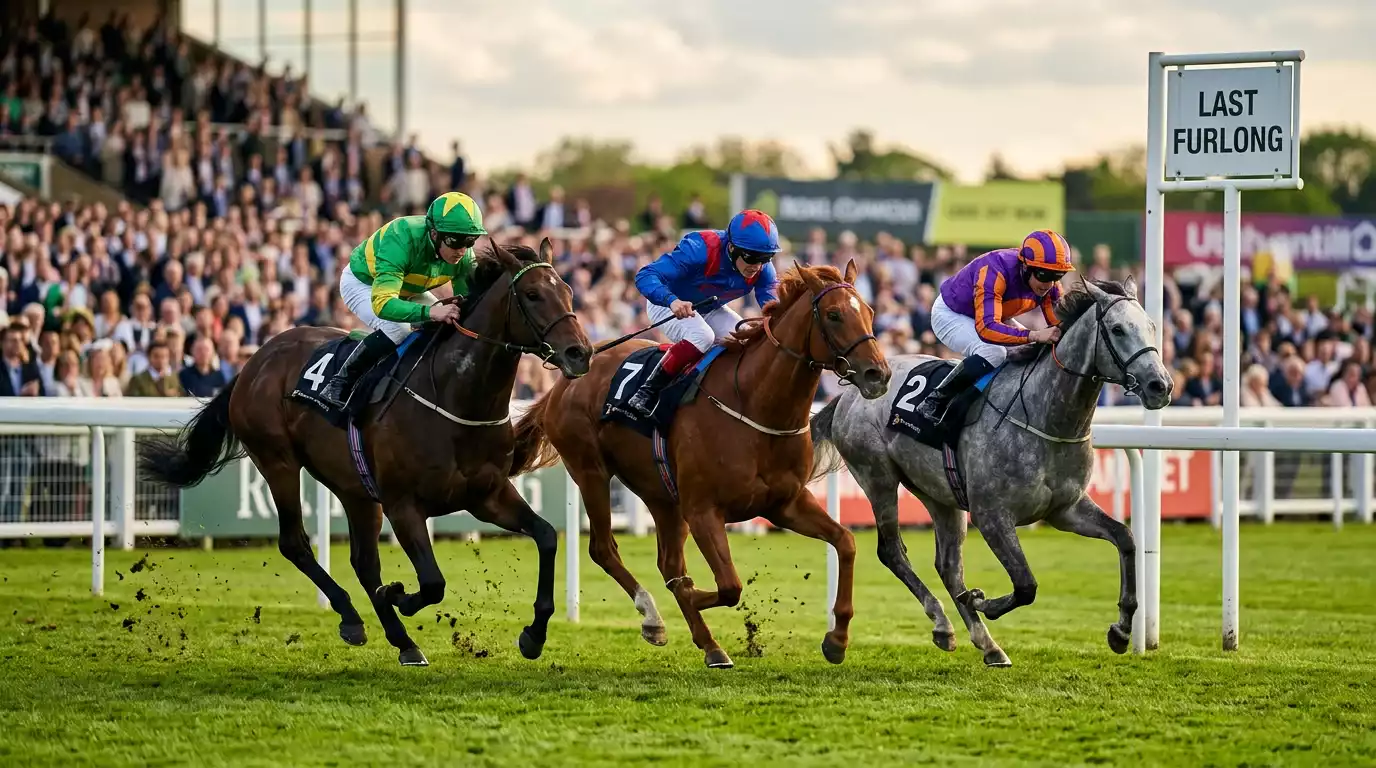
Ten years ago, an editor handed me a single instruction when I started writing about British racing: “Treat the punter like a grown-up.” I have carried that line through every column and late-night pre-Cheltenham briefing since. It is the instruction I will follow here. If you have arrived expecting a marketing splash dressed up as analysis, the next 5,000 words will disappoint you. If you want to understand how British horse racing actually works as a betting market in 2026 — what is regulated, what is taxed, where the money goes and where it leaks — you are in the right place.
British horse racing betting is a category of its own. Football still takes the most money across UK gambling, but racing sits in a different legal and economic universe: a statutory Levy returns to the sport, the Gambling Commission and the British Horseracing Authority oversee it jointly, the calendar runs to roughly 1,460 fixtures a year, and its commercial heartbeat — Cheltenham Festival, Grand National week, Royal Ascot, the Derby — has no equivalent in any other UK betting product. None of that translates neatly from football accumulators or casino spins.
What this guide covers. Market size and trend, the mechanics of a single racing bet, the eight bet types you’ll see on every racecard, the regulatory frame (UKGC, BHA, Levy, affordability checks), the festivals worth knowing, racecard literacy, price and overround, who actually bets on racing, and the grey-market problem now eating into the legal market. Where a topic deserves its own deep-dive, I link out. Where a topic belongs to this overview, I keep it tight.
One number frames everything that follows: in the financial year ending March 2025, remote betting on British horse racing generated GGY of £766.7 million — second only to football’s £1.3 billion, and ahead of every other sport. That is a major commercial product wrestling with a regulatory transition that has reshaped how millions of accounts behave. The rest of this guide unpacks that wrestling match in plain language, with the numbers in front of you and the operator marketing behind us.
Core UK Racing Betting Statistics and Market Data
- £766.7 million GGY for remote racing in the year to March 2025 — second only to football.
- Racing turnover is down 4.2% in the first nine months of 2025 and 12.8% versus 2023.
- Affordability threshold fell from £500 to £150 net monthly deposit on 28 February 2025.
- The Levy hit a record £108.9 million in 2024–25, the fourth consecutive annual rise.
- Around 13 million UK adults bet on the Grand National; 51% pick their horse by name.
- BGC estimates £4.3 billion flows through unlicensed operators annually, including £60m at Cheltenham 2025.
- UK racecourses welcomed 5,031,640 spectators in 2025 — the first time over five million since 2019.
How big is UK horse-race betting in 2025–26?
A friend who runs a mid-market trading desk once told me racing is the only UK betting product where you can watch the money disappear in real time and still not know where it has gone. He was joking about his own job, but he was also summarising the last three years of the British racing market. The headline numbers look healthy. The underneath numbers do not. Both are true at once.
£766.7m
Remote betting GGY on horse racing in the year to March 2025
£16.8bn
Total UK gambling GGY in the same year, up 7.3% year on year
−4.2%
Drop in racing turnover over the first nine months of 2025 versus the same period a year earlier
£44.3bn
Estimated global horse-betting market size in 2022, on track to roughly double by 2032
The headline numbers
British remote racing betting in the year ending March 2025 produced £766.7 million of GGY — Gross Gambling Yield, stakes received minus winnings paid out. Football, the only larger product, generated £1.3 billion. Within the £2.6 billion remote betting category, racing’s share is broadly stable. Within the wider UK gambling market of £16.8 billion, however, casino and slots are growing fastest, so racing is a stable but no longer expanding slice of a bigger pie.
At a global level the picture looks rosier. The worldwide horse betting market was valued at roughly $44.3 billion in 2022 with a forecast trajectory toward $91.2 billion by 2032. Britain remains the largest mature market in that mix, but the growth is happening where the regulatory frame is lighter.
What’s happening underneath
The numbers worth watching are not the static GGY totals but the turnover trend. Total betting turnover on British horse racing across the first nine months of 2025 ran 4.2% below the same window in 2024, and 12.8% below 2023. The first quarter of 2025 alone was down 9% year on year. Average turnover per race dropped 8% in 2024–25 versus the prior year and 19% versus 2021–22.
This is the bit that makes industry insiders nervous. Richard Wayman, the Director of Racing at the British Horseracing Authority, has been blunt: several factors are at play, but the impact of affordability checks and customers either stopping betting or migrating to unlicensed operators heads the list. That diagnosis pins the turnover decline on the regulatory transition rather than on any failure of the product itself.
Premier versus Core: a two-speed market
The 2024 fixture-list trial divided racedays into Premier Fixtures (marquee meetings) and Core Fixtures (the everyday programme). Average turnover per race on Premier Fixtures rose 2.7% in 2025. On Core Fixtures, it fell 8.6%. The British punter is concentrating spend on meetings with television coverage, big prize pots and competitive fields, and disengaging from the midweek programme. That has consequences for racing’s economics, because the Levy depends on overall turnover and the Core programme is where most volume traditionally sat. For more on how operators allocate their pricing attention across the calendar, see our piece on how UK racing betting sites compete on racing-grade depth.

Racing’s GGY is steady at £766.7m, but turnover has fallen for three years running. The market is consolidating around Premier Fixtures and bleeding volume on Core ones — the consequence of a regulatory transition more than a loss of interest in the sport.
How a UK horse-race bet actually works
The first time I tried to explain a single horse-race bet to my mother, she stopped me after four minutes and said: “So you’re paying a shop to hold an opinion for you?” That is, with respect to every clever bit of pricing engineering I am about to walk through, the cleanest one-line summary of what happens when you back a horse at fixed odds in Britain. The shop — the bookmaker — holds your opinion as a contract. If your opinion is correct, the contract pays out at the agreed price. If not, the shop keeps the stake. Everything else is mechanism.
Fixed odds versus the Tote
There are two coexisting systems for pricing a British horse race: fixed odds and pool betting. Fixed odds is what nearly everyone means by betting on racing — you take a price (say 5/1 or 6.0 in decimal terms) at the moment you place the bet, and that price is what you get paid if the horse wins. The bookmaker carries the risk of the price moving against them. Pool betting, run in Britain by the Tote, works on a parimutuel basis: every stake on a given market goes into a single pool, the operator takes commission, and the rest is divided among winning tickets. In practice the Tote accounts for only about 5% of total racing turnover. Fixed odds dominate everything else.
Fractional versus decimal odds
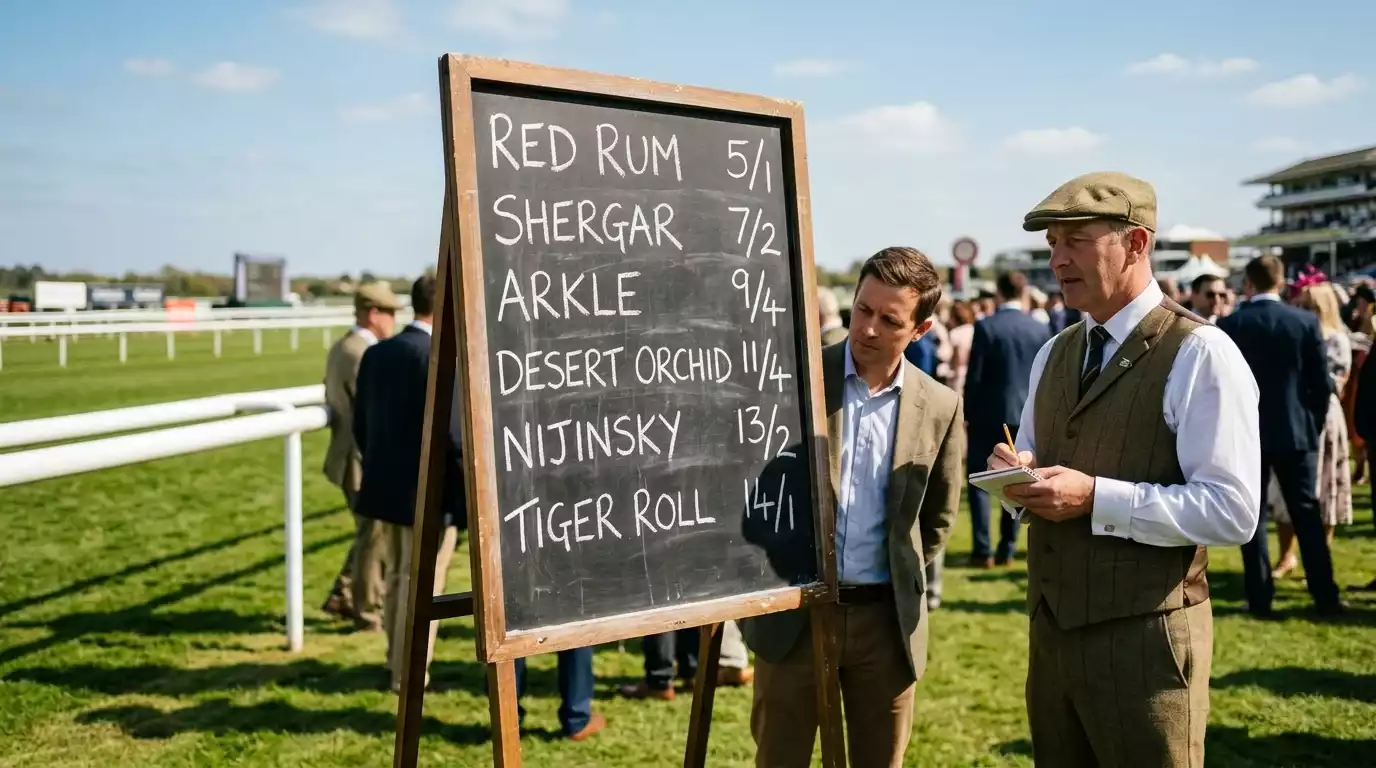
British retail betting grew up on fractional odds — 5/1, 11/2, 7/4. Online betting in Britain has gradually drifted toward decimal odds, which are simply the total return on a winning stake including the stake itself. A horse at 5/1 fractional is 6.00 decimal. A horse at 6/4 fractional is 2.50 decimal. Most operators let you toggle between the two formats in account settings. Neither is more accurate; both encode the same implied probability.
Worked example: a £10 win bet at 5/1
Stake: £10 at 5/1 (decimal equivalent 6.00).
If the horse wins: profit = £10 × 5 = £50. Total returned to your account = stake + profit = £60.
If the horse loses: you lose the £10 stake. Nothing else is at risk.
Implied probability at 5/1: 1 / 6.00 = 16.67% — roughly a 1-in-6 chance, plus margin.
Starting price, early price and how prices move
Every British race has a Starting Price (SP), the official price returned at the moment the race begins. SPs are derived from a sample of fixed-odds bookmakers’ on-course or near-the-off prices and published as the consensus market view at the off. Before the race, the same horse can be priced differently across operators — these are early prices, fluctuating as money comes in. If you take an early price, you lock it in. If you ask for SP, you take whatever the official return is. Most punters take early prices on key races and SPs on the everyday programme.
Place fractions and the non-runner rule
A British horse-race market has two parallel layers: the win market and the place market. The place market pays out if your horse finishes in one of a defined number of placings — typically the first two, three, four or five depending on race type and field size. The place fraction is the proportion of the win price paid on the place portion of an each-way bet. Common fractions are 1/4 and 1/5. I unpack the mechanics in detail in our piece on how bet types reshape your effective house edge.
Tool by TurfLedger
16+ runners pays 4 places at 1/4 — fewer runners, fewer places, shorter fraction
Work out your each-way payout under the exact UK place rules for your race type, and see what Best Odds Guaranteed is really worth.
Place terms depend on race type and field size — not a fixed 1/4 or 1/5 across the board.
Race type
British place terms, sketched: handicaps with 16+ runners typically pay 4 places at 1/4; handicaps with 8–15 runners pay 3 places at 1/5; non-handicaps usually pay 1/5 with fewer places, most often the first 2. Festival meetings often offer extra places as a promotional sweetener — always check the specific race terms before staking.
BOG pays the Starting Price if it’s bigger than the early price you took — it’s a compensator for overround, not a bonus.
BOG pays you out at whichever is bigger — the early price you took, or the official SP — on a winning bet. If SP drifts below your early price, BOG changes nothing; you were already better off taking the early price. The value only appears when the market moves in your favour after you’ve backed the horse.
Content is informational, not financial advice. BeGambleAware
If your horse is withdrawn before the race — declared a NR (non-runner) — your stake is returned for any straight win or each-way single bet. If a horse is withdrawn after the market has formed but at the off, Tattersalls’ Rule 4 applies, deducting a set amount from your winning return depending on the withdrawn horse’s price. Understanding the rule is the difference between a clean payout and a frustrated email to customer support.
SP, NR, UR, PU — Starting Price (official return at the off), Non-Runner (withdrawn before the race), Unseated Rider (jockey came off without a fall), Pulled Up (jockey eased the horse out of the race).
The eight bet types you’ll see on every UK racecard
Here is a question I have asked at every industry training session I have ever run: of two punters staking the same £20 across the same selections, which one walks away with more money over a year — the one who plays four singles, or the one who rolls them into a Lucky 15? The answer surprises people. Bet type is not just a question of “what feels fun” or “what gives me the bigger possible return”. It is a lever on your effective house edge, because the more legs you add to a bet, the more the bookmaker’s margin compounds against you. Knowing which bet type to reach for, and when, is the most underrated skill in racing betting.
The British racing menu has more bet types than most people realise. Here are the eight you’ll encounter on every operator’s site and racecard, sketched in plain language.
| Bet type | What it is | Typical use |
|---|---|---|
| Single | One selection in one race. | The default racing bet. Cleanest pricing. |
| Each-Way | One stake on the horse to win, one on it to place. Combined stake = 2× unit stake. | Bigger fields and longer odds, especially handicaps. |
| Double / Treble / Accumulator | Two, three or more selections combined into a single bet. All must win. | Bankroll growth — at the cost of compounding margin. |
| System bets (Trixie, Yankee, Patent, Lucky 15, Heinz, Goliath) | Multiple combination bets from a fixed pool of selections. A Lucky 15 = 4 selections, 15 bets (4 singles + 6 doubles + 4 trebles + 1 fourfold). | Mid-bankroll punters who want returns even if some selections lose. |
| Placepot | Tote pool bet asking you to find a placed horse in each of the first six races of a meeting. | Small-stake punter looking for a big pool payout over a full afternoon. |
| Forecast / Tricast | Predicting the first two (forecast) or first three (tricast) finishers in correct order. | Specific race types where you have a confident view of pace and shape. |
| Without favourite (and other specials) | Removes the favourite from the market. Pays on the highest-placed non-favourite. | When you fancy a horse but want to avoid pricing against the obvious market leader. |
| Exchange (back / lay) | Peer-to-peer betting through an exchange. You can back or lay any horse. | Trading prices, hedging positions, or simply taking sharper prices than the high street. |
If you take only one thing from this overview, take this: as the number of selections in your bet rises, the bookmaker’s effective margin compounds. A treble at 2/1 each leg looks juicy. The cumulative overround across three pre-priced books, however, eats meaningfully into your edge. None of this means accumulators are “bad” — they exist precisely because some punters want the thrill of small stake to big return — but understanding the trade is the difference between informed risk and accidental loss.
For the maths behind each-way, including worked examples at 1/4 and 1/5 fractions, see our detailed treatment of how each-way betting really works on UK racing. For the system bets, the Tote products and the exchange, the deep-dives live in their own pieces.
Who licences UK horse-race betting and what it means for your account
In late February 2025, I spoke with a friend who has bet on racing every Saturday since he was nineteen. He had been asked, mid-afternoon, by a major operator to provide three months of bank statements before his account could continue to accept deposits. He is a teacher. He earns £45,000 a year. He had deposited just under £200 that month. “I just want to back a horse in the 2:30 at Newbury,” he said. “What does my mortgage have to do with anything?” That conversation is the regulatory transition in microcosm.
The Gambling Commission and the operating licence
Every operator legally taking British bets must hold an operating licence from the Gambling Commission (UKGC), the statutory regulator created under the Gambling Act 2005. The licence sets out what the operator may offer, what protections it must build into the product, and what consumer-facing rules it must follow. It is not a kitemark for “good”; it is a legal threshold without which an operator cannot accept a bet from a Great Britain customer. Verifying that an operator holds a UKGC licence number, displayed in the footer, is the single most important check a punter can make.
The British Horseracing Authority — racing’s governing body
The British Horseracing Authority (BHA) governs the sport. The BHA writes the rules of racing, licences trainers and jockeys, runs the integrity programme, sets the fixture list, and manages welfare standards. When you watch a race at Cheltenham or Doncaster, the on-track stewards report into the BHA. The BHA does not regulate the betting product itself — that is the UKGC’s role — but it sets the conditions under which the sport runs.
The Levy: the statutory link between betting and the sport
The Horserace Betting Levy is the mechanism that returns a slice of betting income to the sport — a statutory contribution from licensed operators on profits from bets on British racing, distributed through the Horserace Betting Levy Board (HBLB) to fund prize money, integrity and welfare. In 2024–25 the Levy hit £108.9 million, a record for the modern era and the fourth consecutive year of increase — up from £105.3 million the previous year. The Betting and Gaming Council estimates its members contribute around £350 million annually to British racing in total. For a deeper look at how that money is calculated, see our piece on how affordability checks reshape Levy economics.
Affordability and financial risk checks
The biggest regulatory change of the last two years is the rollout of financial risk and vulnerability checks. The pilot framework, introduced in stages from August 2024, set a threshold of £500 net monthly deposit for a light-touch frictionless check, with enhanced checks applying above that. On 28 February 2025, the threshold was lowered to £150 — a much wider net. The UKGC reports that of 530,000 checks conducted, 95% passed frictionlessly through credit reference agency data. Five percent did not.
What affordability means for a normal punter. If your net deposits at one operator stay below £150 in a calendar month, you will likely never see an enhanced check. If they rise above that figure, the operator may request data — usually a credit reference check first, occasionally bank statements if other signals fire. You can refuse, but the account may then be restricted. Affordability is not a tax; it is a documentation regime.
The racing industry’s response has been forceful. Brant Dunshea, Chief Executive of the BHA, has summarised it cleanly: through protracted negotiations the sport engaged with government in good faith, providing clear evidence of a growing gap between the cost of providing the sport and the return it receives from betting. That gap is what makes racing uniquely exposed to a regulatory transition that reduces betting volumes — racing depends on Levy, and Levy depends on volume.
KYC, GamStop and the safer-gambling baseline
Two more parts of the safety frame matter. KYC — Know Your Customer — covers identity verification when you open an account and source-of-funds checks for larger deposits. GamStop is the national self-exclusion register: every UKGC-licensed operator is required to refuse a bet to anyone self-excluded through it. Both are mandatory features of any operator legally taking your money. If a site asks for none of this, you are not on a UKGC-licensed site.
From licensing to logistics: the next question is where in the calendar the British punter’s attention actually sits.
The UK racing calendar a punter should mark
If you only ever bet on the four big festivals — Cheltenham in March, Aintree in April, Epsom in June, Royal Ascot in June — you will already be on the screen for roughly half of British racing’s annual betting turnover. Every other weekend, the punter is browsing a regular menu. For four to six weeks a year, the punter is watching the equivalent of cup-final weekends rolling into each other.
Cheltenham Festival
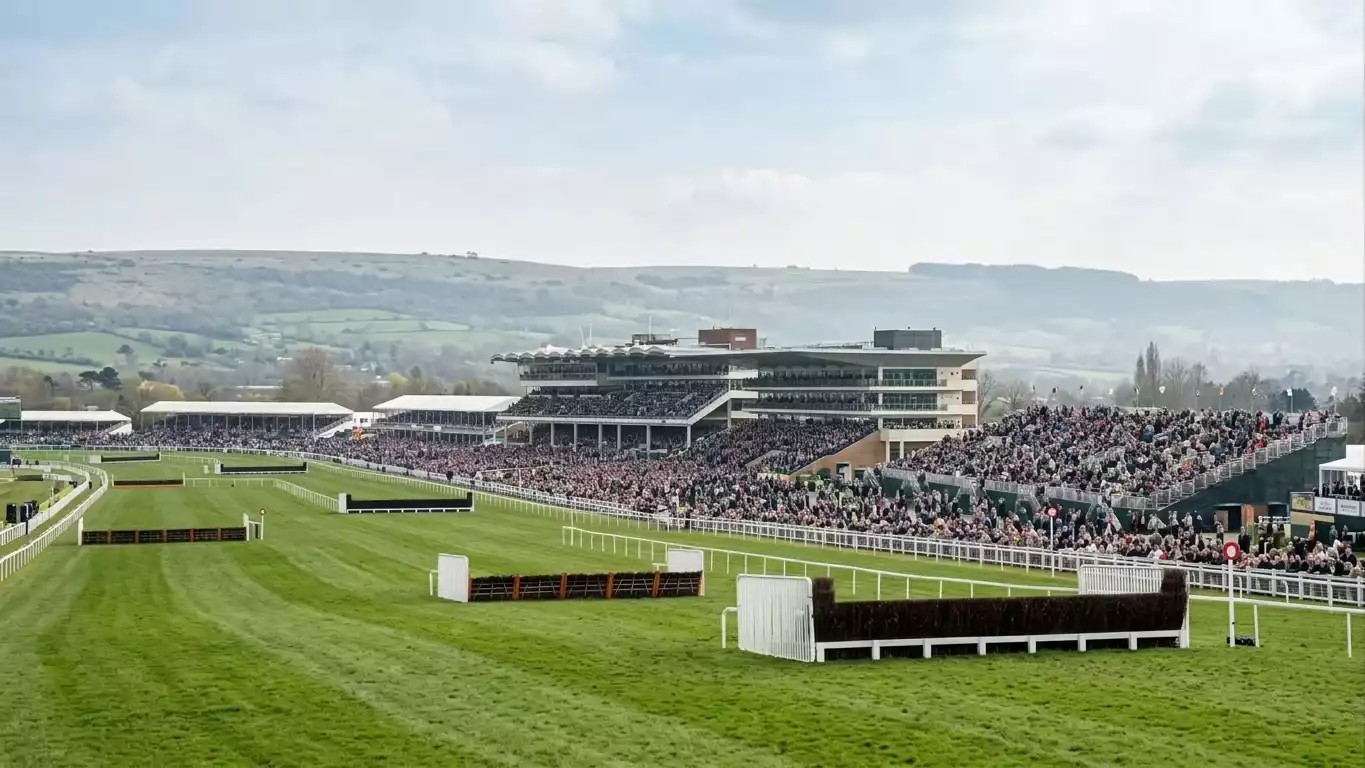
Four days, 28 races, the centre of gravity for British jump racing. At the most recent festival, all 28 races landed inside the year’s top 31 by turnover — the only outsiders were the Grand National, the Epsom Derby and the Scottish National. Daily attendance averages around 60,500, the meeting culminates in the Cheltenham Gold Cup, and ITV’s 2025 Gold Cup broadcast reached 1.8 million linear viewers with a further 3.6 million streaming on ITVX. William Hill alone has projected around £450 million of turnover across the four days of Cheltenham 2026. Lee Phelps, who speaks for William Hill, has put it directly: “The battle between us and the punters over the four days of the Cheltenham Festival is unrivalled in Jumps racing.”
The Grand National
The single biggest betting event on the British calendar — and the most unusual. Roughly 13 million people bet on the Grand National each year, around a third of the adult British population. That number has slipped a little since the peak years (17% of UK adults planned to bet on the 2025 Grand National versus 22% in 2023), but it remains the only race that pulls casual once-a-year punters into the betting market in significant numbers. More than half pick their horse by name, more than a third by gut feeling, and roughly four in ten plan to stake under £10. For a deeper read, see our piece on the 2026 Grand National ante-post market and once-a-year punter behaviour.
Royal Ascot
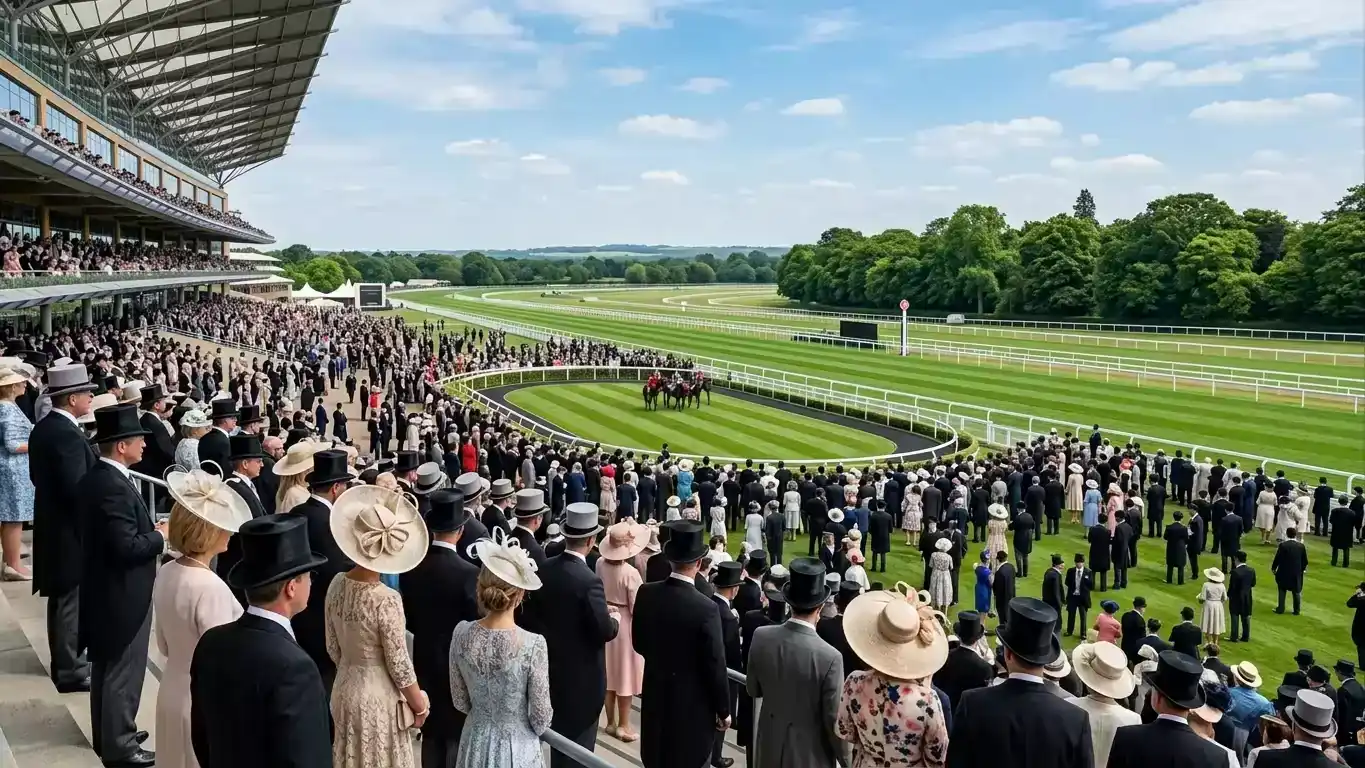
Five days of flat racing across mid-June. Eight Group 1 races, the largest concentration of top-tier flat events in the British calendar, and daily attendance averaging around 54,984 spectators across recent years for a four-year total of over 1.09 million racegoers. Royal Ascot is where the flat season’s stars meet, where extra-place promotions proliferate, and where the betting product expands to accommodate fields of up to thirty runners in the marquee handicaps.
Epsom Derby
One day, one mile-and-a-half, the most famous flat race in the world. Run on the first Saturday of June at Epsom Downs, the Derby tests three-year-olds over an undulating course that no other British meeting replicates. The ante-post market opens months ahead and shapes through a series of trial races from Chester, Dante and Lingfield.
Glorious Goodwood and York Ebor
Two five-day flat festivals — Goodwood in late July, York in mid-August — that drive the summer betting book. Less broadcast-heavy than Royal Ascot but commercially significant, both meetings host major Group 1s and feature the kind of large handicap fields that attract heavy each-way action.
~13m
UK adults betting on the Grand National annually
60,583
Average daily attendance at Cheltenham Festival 2025
54,984
Average daily attendance at Royal Ascot, 2022–2025
28 of 31
Cheltenham races in the year’s top 31 by turnover
The Grand National has been run at Aintree since 1839. Fence heights, course safety, prize money, jockey weights — all have changed over those eighteen-plus decades. The social ritual of a once-a-year punt with the family has survived every revision.
Reading a racecard without losing the plot
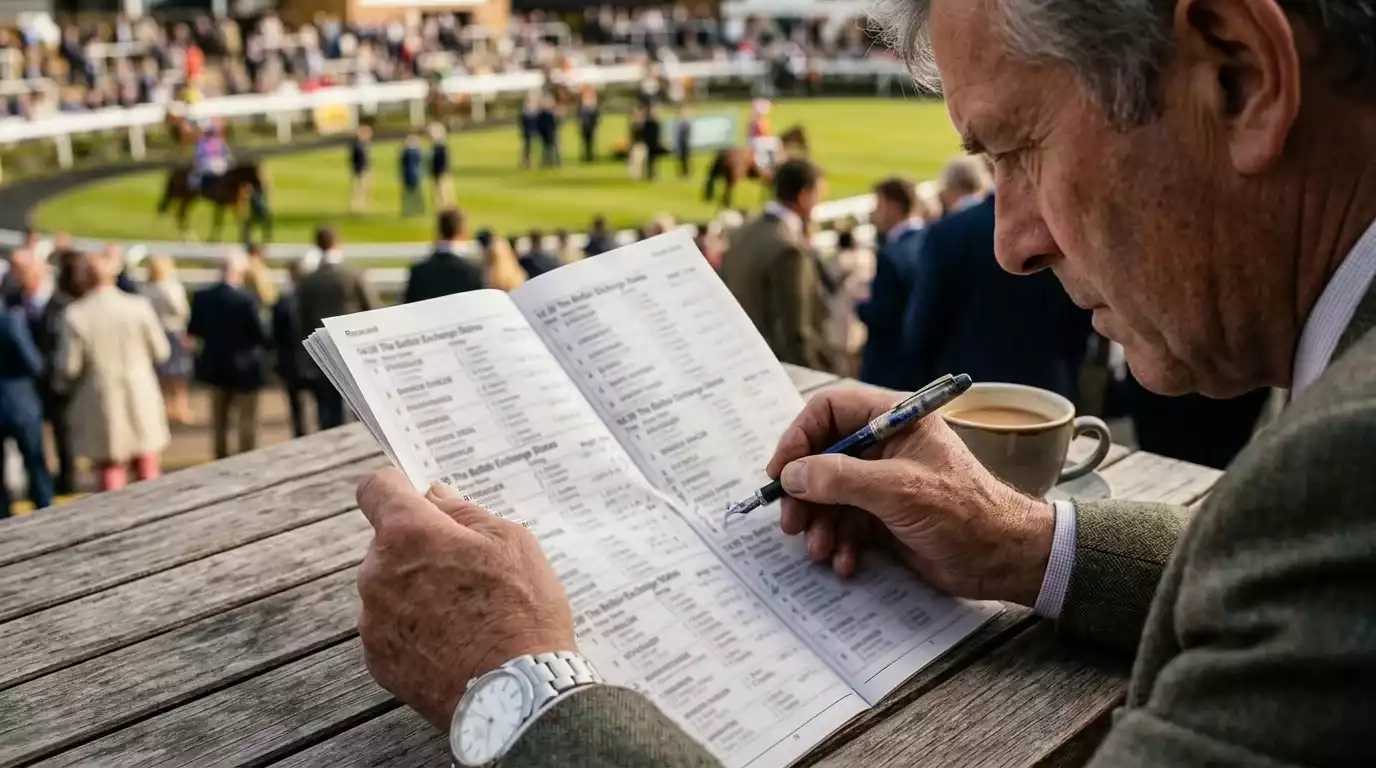
I once watched a perfectly intelligent banker — a man who priced derivatives in his sleep — stare at a Tuesday afternoon racecard from Sedgefield for ten minutes and then ask me, with genuine bewilderment, why there were so many numbers next to the horses’ names. The British racecard is one of the densest data displays in mass consumer publishing. It is also entirely decodable once you know which columns are doing what. You do not need to be a professional handicapper to read it. You do need to know roughly five things before the prices stop looking like algebra.
Going and ground conditions
Every racecard carries the going for the day — the official description of the ground. The British scale runs from firm and good-to-firm through good, good-to-soft, soft and heavy. Going dramatically reshapes which horses can produce their best. A horse with proven heavy-ground form may be unbackable on good-to-firm and vice versa. The official going is set by clerks of the course using both a manual reading and a going stick, which measures penetration and shear. Forecast windows on race morning matter: a single inch of rain can move the official description by two steps.
Weights, the official rating and how class works
The weight a horse carries in a handicap is determined by its OR (Official Rating), a number set and revised by the BHA’s handicapper. Higher OR equals more weight. The point of the handicap system is to compress the field so that, in theory, all horses have an equal chance — though the practice rarely matches the theory, which is precisely where the punter looks for value. Two other ratings worth knowing are RPR (Racing Post Rating) and Topspeed: both private, both useful as a second opinion against the official mark.
Jockey and trainer form
Below the horse’s name on a racecard you’ll see the jockey, the trainer and a column of recent form figures. A “1-2-PU-3” reads as: won last time, second the time before, pulled up the time before that, third the time before that. The form column is a compressed history of the last few runs. Hot trainers (those with above-average win rates in the previous 14 or 30 days) and hot jockeys (booked aggressively by good stables) are signals the screen-watching public price quickly. They are not edge, but they are context.
Draw bias
On flat courses, the starting stall (the draw) can be a measurable advantage at certain distances on certain tracks. Chester, Beverley, Pontefract and Goodwood are the most famous bias tracks in British flat racing, and at some distances the bias is large enough to shift implied win probability by 10–20%. Bias varies by trip and ground. A serious punter checks it; a casual punter ignores it.
Before you place a bet on a major race
- Confirm the going and check the forecast for the next 24 hours.
- Read the form column for each runner in your shortlist.
- Check the trainer’s strike rate in the last 14 days.
- Note the jockey booking — particularly any unusual changes from previous starts.
- For flat racing, check the draw bias for the distance and going.
- Compare the price across at least two operators before staking.
- Set your stake before you look at the price, not after.
These six checks will not turn you into a profitable punter on their own. They will, however, save you from the kind of avoidable misreads that turn a thoughtful bet into a guess.
Price, overround and Best Odds Guaranteed
Why does the same horse cost 9/2 on one operator and 5/1 on another? The answer is not that one bookmaker is generous and the other is stingy. The answer is overround — the cumulative percentage by which the priced book exceeds 100%. Overround is the bookmaker’s margin, embedded directly into the price of every horse on a racecard. Understand overround and you understand why two operators can offer “the same race” at meaningfully different value.
Calculating overround
Take each horse’s decimal price, divide 1 by it to get the implied probability, sum across the whole field, and you have the book percentage. A perfectly priced book would total exactly 100%. A real book on a ten-runner handicap typically totals between 108% and 115%. The amount above 100% is the bookmaker’s edge — the price you pay, on average, for the convenience of placing a bet.
Worked example: a ten-runner handicap book
Imagine a ten-runner field where the prices imply individual probabilities adding to 112%. The bookmaker has built 12% of margin into the field. The favourite is 4.0 (3/1) — implied probability 25%. If the favourite’s “true” probability is 22%, the price is unfavourable; if it is 28%, the price is favourable to the backer. Overround is a header on the math; value lives in the comparison between implied and true probability for the horse you actually want to back.
Best Odds Guaranteed
Best Odds Guaranteed (BOG) is the single most valuable promotion in routine racing betting. The mechanic is simple: if you take an early price and the Starting Price is bigger, the operator pays you out at the SP rather than the early price you took. In effect, BOG removes the downside risk of taking a price too early. It is not a bonus — it is a compensator for the bookmaker’s overround.
Where BOG gets complicated is in the small print. Operators set their own start time for the BOG window (typically from a fixed time of day on race day), apply caps on the maximum extra payout, exclude certain race types (virtual, US racing, some ante-post markets), and may apply different rules to in-shop versus online stakes. Reading the BOG terms before taking the price is the difference between using the promotion and assuming you are using it.
How affordability has shifted the price ecology
Less visibly, the affordability transition has changed how prices form in the market. The Betfair Exchange’s pre-off win market on Boxing Day fell from £13,031,239 in 2023 to £11,216,744 in 2024 — a 14% drop in a single year, in a market that historically grows. The lost liquidity is concentrated at the higher-stake end of the customer base, the customers most sensitive to affordability friction. Less liquidity means less efficient prices. For everyday punters, this matters because the exchange has historically acted as a price-discovery mechanism that fixed-odds books reference. Thinner exchange markets mean wider fixed-odds books.
If you want the systematic operator-by-operator differences in BOG terms, exchange access and how to score a racing site against eight critical criteria, the territory is covered in our racing-grade buyer’s piece. The short version: not every UKGC-licensed site is racing-grade, and the BOG terms are the most diagnostic line in the small print.
Who actually bets on British racing?
Imagine the regular British racing punter and you may picture a Saturday-afternoon high-street regular with a folded copy of the Racing Post under one arm. That image is now badly out of date. The actual population of British racing bettors in 2026 is more dispersed, more online and more volatile in its participation than that picture allows. The Gambling Commission’s quarterly survey of British gambling gives us the cleanest read.
Participation: a moving target
In the Gambling Survey for Great Britain Wave 3 — covering July to October 2025 — 4% of British adults reported having bet on horse racing in the previous four weeks. In Wave 2, covering April to July 2025 (the peak of the spring–summer racing season), the figure was 7%. Racing participation rises and falls dramatically with the racing calendar; the Grand National and Cheltenham weeks pull people in for one or two bets a year, and the rest of the calendar settles back to a smaller core.
Looked at as a product mix, racing sits firmly in the British betting menu without dominating it. Among active bettors, around 67.1% bet on football, 45.1% on casino products and 35.5% on horse racing. The everyday racing bettor is, statistically, also a football bettor; the everyday football bettor is not always a racing bettor.
How money and behaviour cluster
The most striking pattern in the survey data is what happens at the higher-spend end of the population. Among British bettors spending £251–£500 per week, 67.8% said affordability checks had worsened their experience. Among bettors spending more than £500 per week, the figure was 89.5%. By contrast, 65.3% of all surveyed bettors reported no impact from the new check regime, with only 3.3% saying the changes improved their experience. The takeaway is not that affordability has destroyed the market — most bettors do not feel it — but that it has restructured the experience of the high-volume segment.
4%
UK adults betting on horse racing in the four weeks to October 2025
35.5%
Share of active UK bettors who back horse racing
89.5%
Punters spending £500+ per week reporting worsened experience from affordability checks
51%
Once-a-year Grand National punters who pick their horse by name
The once-a-year wildcard
And then there is the Grand National. Once a year, racing’s customer base balloons to roughly thirteen million people. The behavioural profile of that population is unlike the rest of the year. Richard Marsh of OLBG has summed it up directly: unlike other popular racing festivals, the Grand National appeals to once-a-year punters, which is why 51% of UK adults planning to bet on the race pick their horse by name, 36% by gut feeling and 14% by colour. Only 21% reference the form. Forty-three percent of Grand National 2025 bettors planned to stake under £10, and at one operator roughly four-fifths of all stakes were £5 or less. This is mass-market entertainment betting, and the product design that serves it is fundamentally different from the product design that serves the weekly Saturday punter.
The grey-market problem and how to spot a parasite operator
“Black market” is a misleading phrase for what is actually happening in British betting. The unlicensed operators taking British money are not basement-run street books. They are professionally designed websites that buy search-engine advertising, accept credit cards and offer a slick product. They simply do not hold a UKGC licence. Many of them advertise specifically into the gaps that affordability checks have opened up — frictionless deposits, no checks, no questions. The Betting and Gaming Council estimates the total unlicensed UK gambling market at £4.3 billion a year, with around 1.5 million British adults using these operators in some form.
Racing is over-exposed. The BGC has estimated that around £60 million flowed through unregulated operators during the 2025 Cheltenham Festival, and around £10 million on Grand National day alone — roughly 5% of the legal Grand National pool. The BHA’s own “Right to Bet” survey of 14,000+ racing punters found that 9% had already placed bets with unlicensed bookmakers, 12% had received offers from them, and four in ten said they would consider doing so if regulatory checks tightened further. The grey market is not hypothetical. It is a measurable, growing leak.
Grainne Hurst, the Chief Executive of the Betting and Gaming Council, has been characteristically direct about the dynamic: “These parasite operators don’t pay tax, don’t care about safer gambling, and do not contribute a penny to the levy.” She has been equally pointed about the policy mechanics that drive customers across the line: forcing punters to hand over bank statements, in her words, is not frictionless. It is intrusive. And it will, in her view, drive customers to the illegal market where there are no safeguards at all.
Five red flags for an unlicensed operator. No UKGC licence number in the site footer. Acceptance of credit cards for gambling (banned for licensed UK operators since 2020). No GamStop integration. No deposit limits or reality checks in the account settings. Advertising language promising no checks, no questions, frictionless deposits at any level. If any one of these is present, the operator is almost certainly not legally licensed to take a bet from a British customer.
The cost of using an unlicensed site is not just legal abstraction. It is the absence of dispute resolution, the absence of dormant-funds protection, the absence of GamStop integration, and the absence of the Levy contribution that funds the sport. The grey market’s £4.3 billion is not money the licensed industry has chosen to ignore — it is money that has actively migrated, customer by customer, away from the regulated environment.

Frequently asked questions
How does each-way betting work in UK horse racing?
An each-way bet is two bets in one. Half your stake goes on the horse to win at the full advertised price; the other half goes on the horse to finish in a defined number of placings — typically two, three, four or five depending on race type and field size. The place portion pays at a fraction of the win price, most often 1/4 or 1/5. If your horse wins, both halves pay out. If it places but doesn’t win, only the place portion pays. A £5 each-way bet is therefore a £10 total stake.
What are the most popular types of horse racing bets in the UK?
The single remains the most common — one horse, one race. The each-way bet is next, particularly on big handicaps. Beyond that, system bets (Lucky 15, Yankee, Patent) are heavily used by mid-stake regulars, the accumulator remains popular on weekend cards, and the Placepot fills the small-stake-big-pool niche. The Grand National skews the numbers: once-a-year punters reach overwhelmingly for the single or each-way single.
Which UK bookmakers are licensed for horse racing betting?
Any operator legally taking a horse-racing bet from a Great Britain customer must hold an operating licence from the Gambling Commission. The licence number is displayed in the footer of the operator’s website and can be cross-checked on the Commission’s public register. If a site doesn’t display a UKGC licence number, or that number doesn’t match an entry on the register, it is not legally licensed to take your bet — regardless of how legitimate the brand looks.
What is Best Odds Guaranteed (BOG) and how do I claim it?
Best Odds Guaranteed pays you out at the Starting Price if the SP returns bigger than the early price you took. You don’t need to claim it — when BOG is in effect, the operator applies it automatically. The catches live in the small print: the start time of the BOG window (typically a fixed time on race day), the cap on the maximum extra payout, and the exclusion of certain race types. Reading the BOG terms before taking a price is the difference between knowing what you are getting and assuming it.
How do affordability checks affect horse race betting?
Since 28 February 2025, the trigger threshold for a light-touch frictionless affordability check has been £150 net monthly deposit at a single operator. The check is conducted invisibly via credit reference agencies in 95% of cases. If the check fires a flag, the operator may request additional documentation. You can refuse, but the account may then be restricted. For casual punters, this rarely appears. For higher-stake regulars, it has become a structural part of the experience.
How are place fractions and place counts decided per race?
The British industry follows a standard set of place terms based on race type and field size. As a rough sketch: handicaps with 16+ runners typically pay four places at 1/4; handicaps with 8–15 runners pay three places at 1/5; non-handicaps usually pay 1/5 with varying place counts. Big festivals often see operators offer “extra places” — five or six places where four was standard — as a promotional sweetener.
Is betting on UK horse racing safe and legal?
Yes — provided you bet through a UKGC-licensed operator. The licensed market is one of the most heavily regulated betting environments in the world, with mandatory KYC, deposit limits, time-outs and GamStop integration. The risk is the unlicensed grey market, which now reaches a meaningful share of British racing money. Checking that the operator displays a UKGC licence number is the single most effective safety step a punter can take.
A note on how this guide is updated
British racing betting moves faster than guides like this can. The affordability threshold dropped from £500 to £150 in a single revision. The Levy posted a record £108.9 million in 2024–25, but the underlying turnover declined for the third straight year. The Cheltenham viewership in 2025 broke through five million across linear and streaming. The Budget on 26 November 2025 raised Remote Gaming Duty and Machine Gaming Duty while leaving racing’s 15% Remote Betting Duty untouched. Any of those numbers will look different a year from now, and the guide you are reading is built to be revised, not preserved.
The numbers move quickly because the underlying transition is still active. Wave 3 of the Gambling Survey for Great Britain is fresh, the next phase will land in 2026, the 2024 fixture-list trial enters its formal review, and the affordability framework is mid-implementation rather than settled. Quarterly turnover and Levy figures shift the picture in tens of millions at a time. Treat any data point in this guide as a snapshot rather than a permanent fact.
If you read one piece in this guide and want to go deeper, pick the topic that matters most to your betting. The mechanics of each-way live in their own piece. The affordability transition has a dedicated deep-dive. The Grand National, Cheltenham and Royal Ascot each have their own coverage. The shortlisting of a racing-grade operator and the bet-type maths each warrant their own analysis. The guide you have just read is the map. The cluster pieces are the territory.
Created by the ”Bets Horse Racing” editorial team.